


The Tampa Bay Rays and Toronto Blue Jays are familiar AL East rivals, and their meetings often provide an interesting mix of power hitting, pitching battles, and late-game pressure. Both clubs regularly rely on talented starters, deep bullpens, and dangerous hitters to gain an edge. For fans following Tampa Bay Rays vs Toronto Blue Jays match player stats, their four-game series offered several notable individual performances and clear changes in momentum from one matchup to the next. Discover Tampa Bay Rays vs Toronto Blue Jays match player stats, game-by-game scores, pitching highlights, batting stats, and top performers.
Series Overview
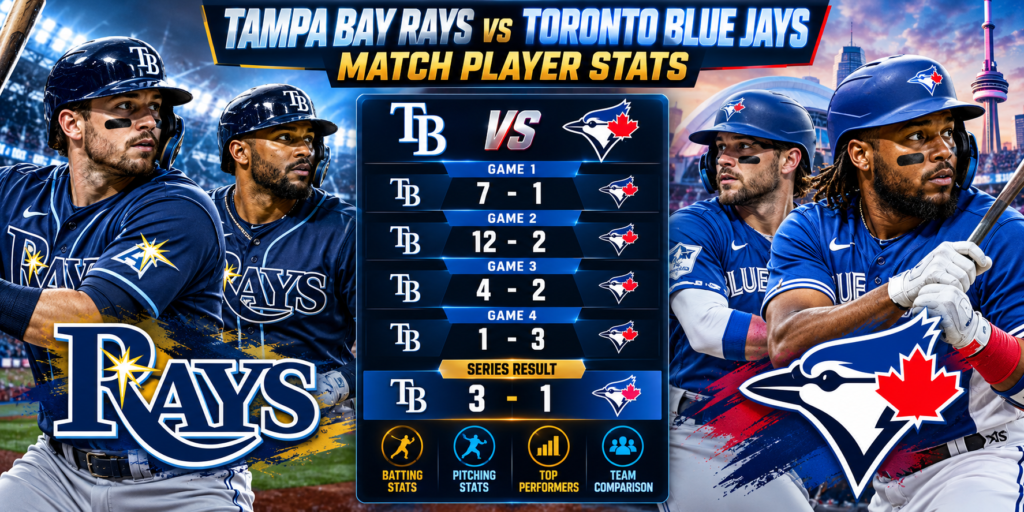
Tampa Bay took control of the four-game series by winning the first three contests before Toronto responded in the finale. The Rays produced their strongest offensive performance in Game 2, while the Blue Jays gradually improved on the mound as the series progressed. Toronto finally combined effective pitching with timely offense in Game 4. Overall, the series highlighted Tampa Bay’s greater consistency while also showing how quickly individual pitching and batting performances can change a matchup.
Game 1: Rays 7, Blue Jays 1
The Rays opened the series with a convincing 7-1 victory, using steady offensive pressure to take command of the game. Tampa Bay generated scoring opportunities throughout the contest instead of depending on a single large inning. Drew Rasmussen provided an effective start and helped prevent Toronto from developing offensive momentum. Meanwhile, the Blue Jays struggled to produce consistent contact or meaningful scoring chances, allowing Tampa Bay to establish an early advantage in the series and set the tone for the following games.
Game 2: Rays 12, Blue Jays 2
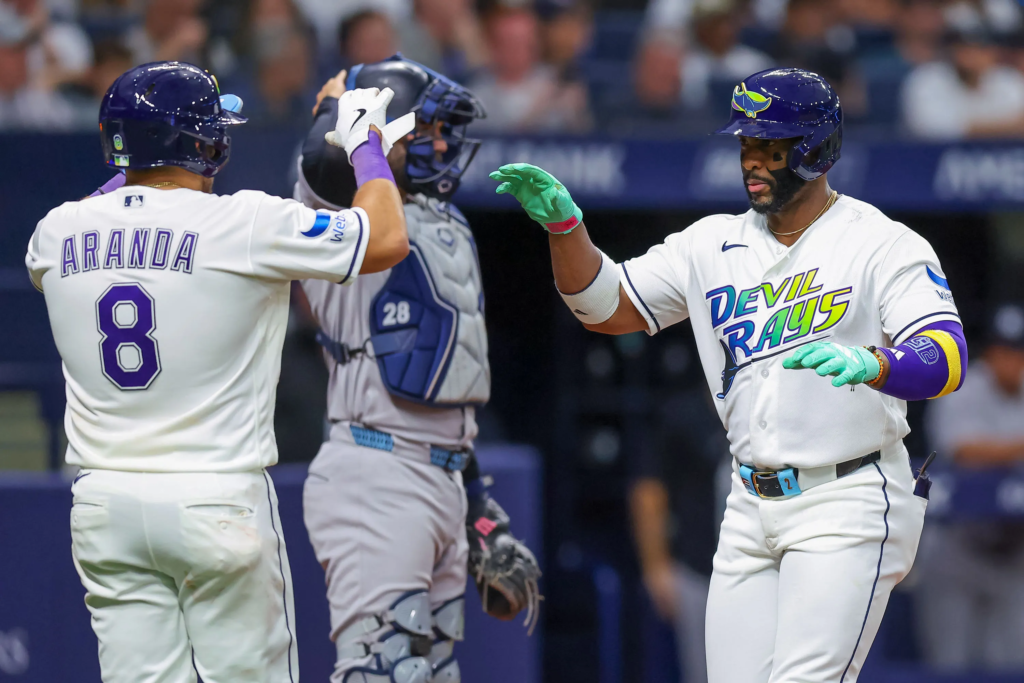
Tampa Bay delivered its biggest offensive performance of the series in Game 2, defeating Toronto 12-2. The Rays received contributions throughout their batting order and repeatedly created scoring opportunities against Blue Jays pitching. Vladimir Guerrero Jr. finished 1-for-4 for Toronto, while George Springer went hitless during a difficult night for the lineup. Tampa Bay also controlled the game from the mound, limiting Toronto to two runs and preventing the home team from mounting a serious comeback.
Game 3: Rays 4, Blue Jays 2
Game 3 developed into a much tighter pitching battle as Toronto improved considerably on the mound. Shane Bieber delivered an impressive start, pitching seven innings while allowing only three hits and one run with three strikeouts. However, the Blue Jays could not provide enough offensive support to turn his performance into a victory. Tampa Bay remained patient and capitalized on its opportunities, eventually scoring enough runs to secure a 4-2 win and guarantee the Rays the four-game series.
Game 4: Blue Jays 3, Rays 1
Toronto avoided a four-game sweep with a 3-1 victory in the series finale. Blue Jays pitching delivered its best overall team performance of the set, holding Tampa Bay to only one run and limiting the scoring opportunities that had caused problems earlier. Toronto’s offense did not need a huge performance because its pitchers kept the game under control. Timely hitting provided enough support for the Blue Jays to finish the series positively after dropping each of the opening three matchups.
Tampa Bay Rays vs Toronto Blue Jays Standout Player Stats
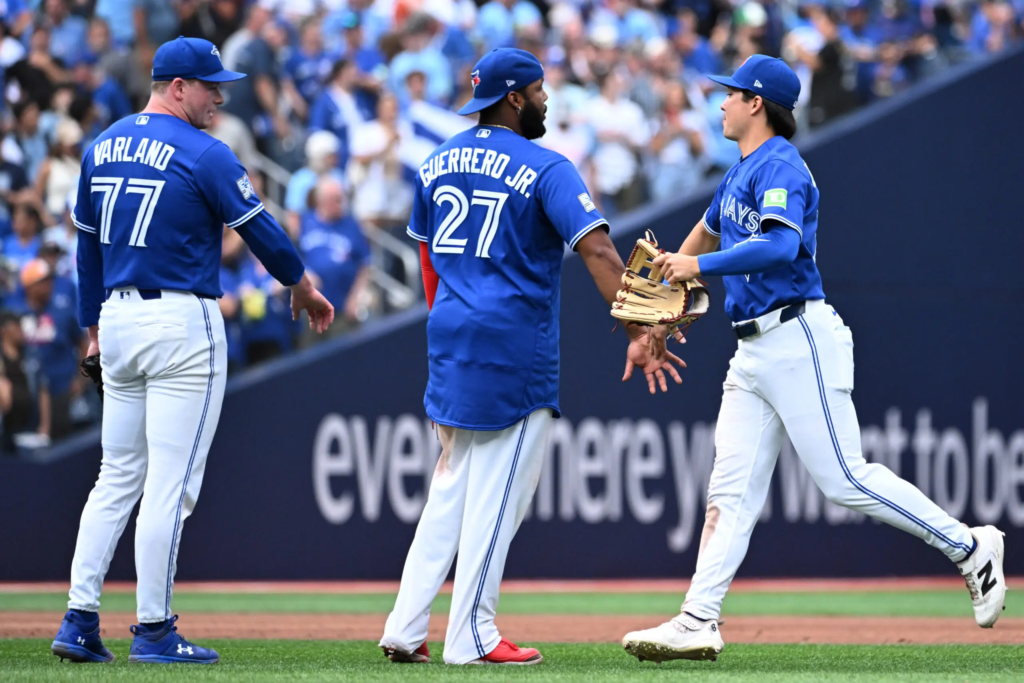
Several individual performances shaped the series. Shane Bieber produced one of Toronto’s strongest pitching outings by allowing one run across seven innings in Game 3, although the Blue Jays still lost. Drew Rasmussen helped Tampa Bay establish control during the opener with a solid start. At the plate, Toronto struggled to generate consistent production during the first three games. Tampa Bay, meanwhile, received broader offensive contributions, particularly during its dominant 12-run showing in the second matchup.
Team Performance Comparison
The Tampa Bay Rays vs Toronto Blue Jays match player stats show a noticeable difference in offensive consistency during the series. Tampa Bay scored 23 runs across the four games, including 12 in Game 2, while Toronto’s strongest result came in the finale. The Rays successfully combined timely hitting with effective pitching during their three victories. Toronto showed improvement later in the series, particularly on the mound, but its limited early offensive production made recovering from the opening losses difficult.
What the Series Showed
This four-game set demonstrated how pitching depth and consistent run production can shape an entire baseball series. Tampa Bay controlled the opening games through balanced performances, while Toronto became more competitive as its pitching improved. The Blue Jays’ victory in Game 4 prevented a sweep, but Tampa Bay still finished with the stronger overall series result at 3-1. For fans comparing match player stats, the individual pitching performances and changing offensive output provide the clearest picture of how the series developed.
Final Thoughts
The Tampa Bay Rays vs Toronto Blue Jays series showed how quickly momentum can shift across several games. Tampa Bay controlled most of the series with consistent hitting and dependable pitching, winning three of four matchups. Toronto struggled early but improved considerably and avoided the sweep with a strong finale. Overall, the Tampa Bay Rays vs Toronto Blue Jays match player stats highlight Tampa Bay’s balanced production, Toronto’s late response, and several notable individual pitching performances.
FAQs:
Who won the Rays vs Blue Jays four-game series?
Tampa Bay won the series 3-1 after taking the first three games. Toronto prevented a sweep by winning the fourth and final matchup 3-1.
What was the biggest win of the series?
The Rays recorded the largest victory in Game 2, defeating the Blue Jays 12-2 behind a productive lineup and strong overall pitching performance.
How did Shane Bieber perform against the Rays?
Shane Bieber pitched seven innings in Game 3, allowing three hits and one run while recording three strikeouts. Toronto still lost the game 4-2.
How did Vladimir Guerrero Jr. perform in Game 2?
Vladimir Guerrero Jr. went 1-for-4 during Toronto’s 12-2 Game 2 loss. The Blue Jays struggled collectively to generate offense against Tampa Bay.
How many runs did the Rays score in the four games?
Tampa Bay scored 24 runs across the four listed results: seven in Game 1, 12 in Game 2, four in Game 3, and one in Game 4.
Read More: Lydia Moynihan Age: From Fox Business Producer to NY Post Wall Street Reporter